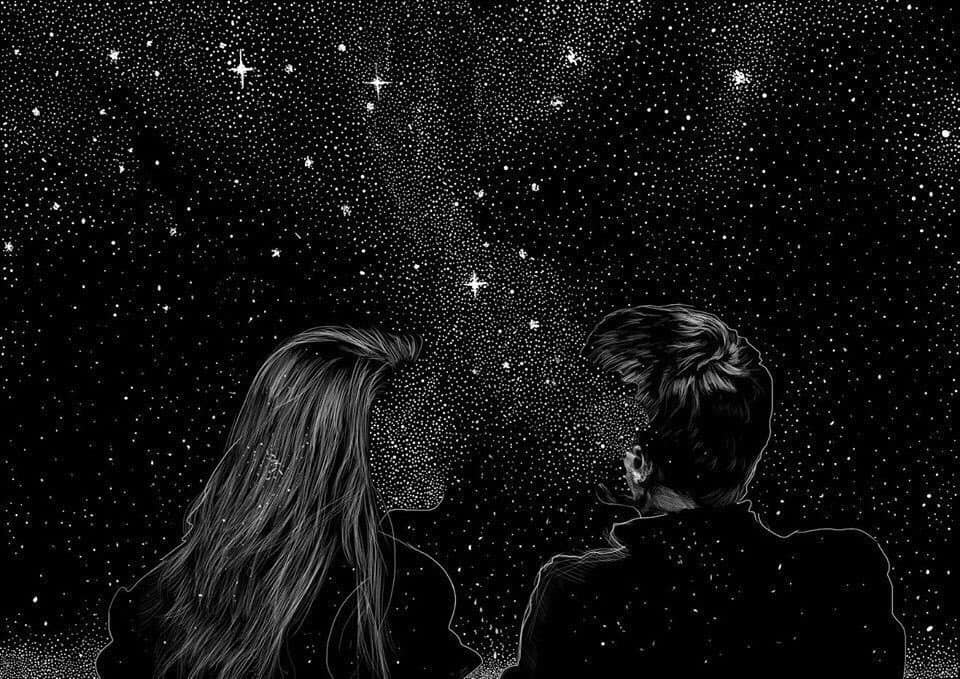
Relationships involve communication on different levels.
Relationships can be depleting or nourishing.
Nourishing relationships are primarily based on respectful communication, where both parties understand the difference between facts, opinions, assumptions, needs, preferences, emotions, and fears. Otherwise, communication often turns into a vanity fair of showcasing one’s rational mind.
As Erich Maria Remarque said, “There is nothing more exhausting than having to bear witness to someone demonstrating their intellect. Especially when they have none.”
When you understand your inner architecture and the aspirations of the Not-Self that distort this communication, you open up to relationships of different quality.
Whether it’s relationships with children, partners, or blocks on the path to self-fulfillment, the main question that arises is that of how we invest our energy.
Let’s take children, for example. We are all connected to the natural flow of energy in childhood. Now imagine how children perceive us, adults, with our narrow-mindedness, rules, fears, prejudices, and our knowledge of how things should be.
Very often, children can feel us, but we cannot feel them. And that hurts. It leaves traces that can last a lifetime for the child.
Just a lack of understanding of who our children truly are. And because of this – a lack of acceptance, disapproval.
In such a way, with the best of intentions, we program them to lose their own resources, trying to fit them into certain frameworks. Unknowingly, we may subject our own children to years of a relentless pursuit of external validation and love.
In such a position, any person loses their strength, and as a result, there may be achievements, but the inner resources to enjoy and savor them are absent.
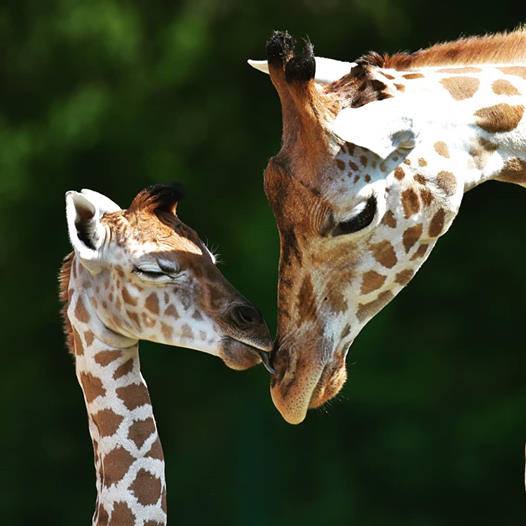
“We can never truly know another person and never fully become one with another individual. In this Maya, things don’t work that way. However, we can genuinely accept the other person. And that’s where true beauty lies.
Accepting another person is not something that can be done easily. In fact, it’s not simple because it’s evident that in the complexity of any interaction between people, there will always be something that’s very challenging to deal with. To truly accept another person, you can only do so when you can see that person and recognize that they are not at fault, that it’s not their blame.
For me, the initial realization that occurred at the beginning of my process was to stop thinking that somehow my mother and father were responsible for something that should have turned out differently. To let go of the blame and similar things that are deeply ingrained within us.
I saw their lack of choice, just as I see the lack of choice in all beings. Because with their design, with their Not-Self, conditioned by their culture, they couldn’t have been anything else. They did what they could with what they had. They struggled, just like everyone else in this Not-Self world.
Once you can understand that another person has no choice and can accept that, and accept it with dignity, then you can hope that this respect will be returned to you by the other person.”
Ra Uru Hu
So much has been written and said about the nature of Love.
But what is love from the perspective of Human Design, and what is it often mistaken for?
“It is a profound teaching, that love begins within oneself, in the true aloneness of the illusion of form; that universal love can only be found in the Now, in surrender to the life that happens; that there can be no love in or for Humanity until its actions are correct.
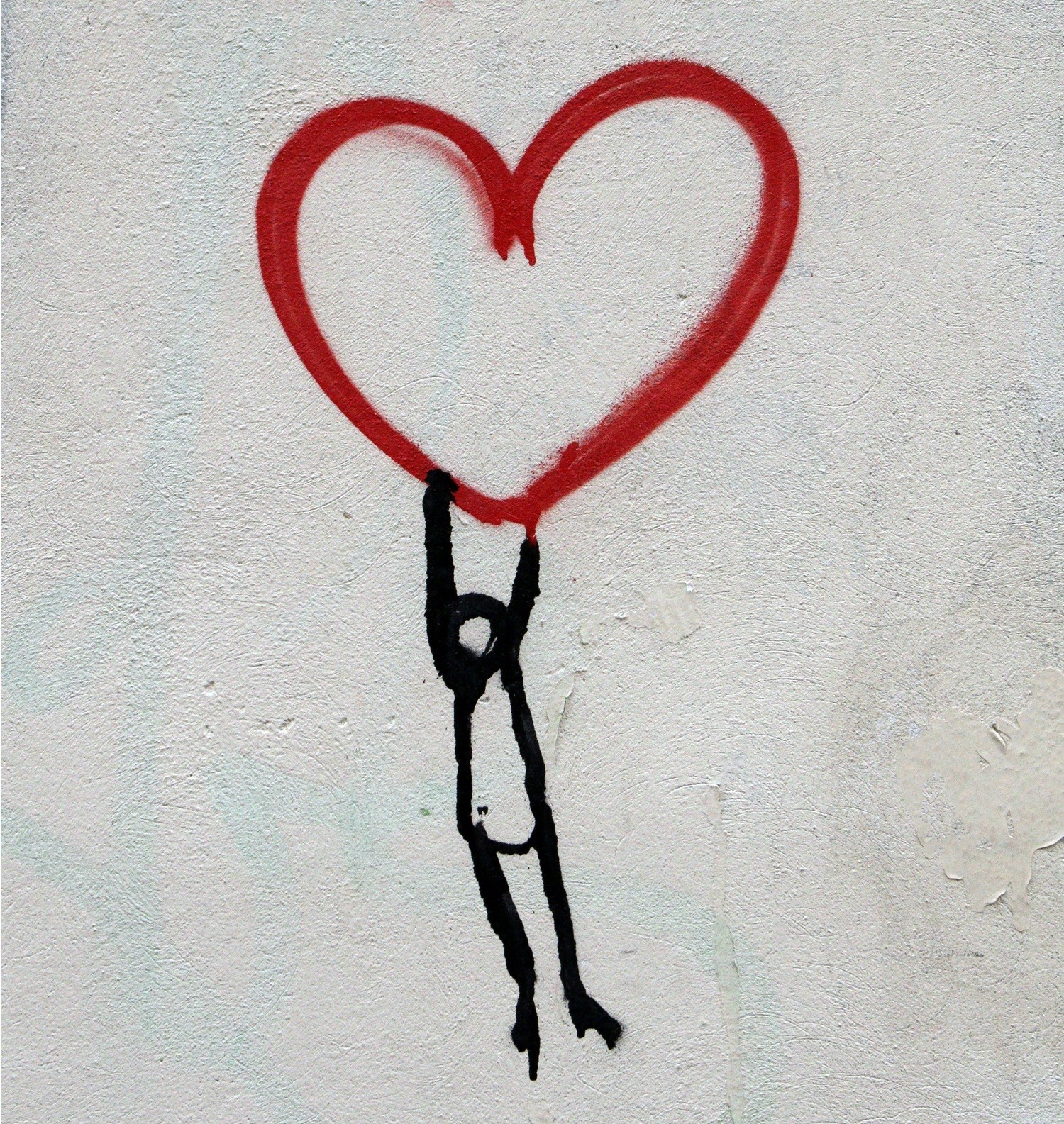
And finally, that it is our form, our bodies that need to be honored as vehicles of consciousness, and that our differences are holy and mutative.
We are conditioned to learn love from the other, from the mother and the father, from the lover and the child. In this way, we are conditioned to seek love from others in order to ‘feel’ loved.
The ‘Not-Self’ does not love itself. In not having love within oneself, it becomes a commodity. Something of value worth seeking, suffering, and longing for; a commodity that defines most beings’ lives.
The measuring of love, the externalization of Love: ‘He loves me, I love him’, ‘I don’t love him enough’, ‘He doesn’t love me enough’, ‘I wish he loved me more’, and so on.
None of the above is about love. It is more about fear of aloneness, an aloneness void of self-love, driven by inadequacy and insecurity”.
Ra Uru Hu
Get a bonus
HOW TO SUSTAIN YOUR RESOURCE
depending on the Genetic Type
Each Genetic Type has unique tools for returning to a resourceful state. By using them, you can be in the right place and reduce the amount of resistance in your life.
Get a bonus
HOW TO SUSTAIN YOUR RESOURCE
depending on the Genetic Type
Each Genetic Type has unique tools for returning to a resourceful state. By using them, you can be in the right place and reduce the amount of resistance in your life.
About the mechanics of any relationship
“Right from the beginning, from the very beginning, when I first began to show people their designs, their first inclination was to compare it to somebody else’s. It’s one of the most magical things about the structure of the BodyGraph, that it’s so easy for us to work with composites.
It’s so easy for a first-time novice who has just received their chart to look at the relationship of their chart to somebody else’s. And not so much that they understand in depth what they’re seeing, but they can see the connections and similarities.
First, understand Yourself
When you begin your process in Human Design, naturally you’re going to want to know what somebody else’s design is, particularly in terms of what Type they are. And the moment that you look at their chart or the moment that you calculate their chart and you compare it to your own, the obvious is really where you begin.
Remember, this is one of the most important things to understand. At the very beginning of looking at any kind of partnership is to really understand yourself. At the moment that you’re really clear about yourself then you’re going to be much more aware of what’s happening to you in a relationship with anyone else.
The first thing you have to be clear about when looking at yourself is to look at the whiteness. What I mean by that is that if you look at your BodyGraph you will notice a limitation in the number of Gates that can be activated in a design. There are only so many imprinting forces. The vast majority of your design, even if it looks like it’s colored in a lot, is not activated. It’s open, it’s white.
Receptors
Now, remember something about openness. Whether that openness is in a Center, a Gate, or a Channel, it does not mean it’s empty or broken, and it doesn’t have to be fixed. What it really is, is a receptor. These are receptors. Remember that when you’re looking at your BodyGraph, what you’re looking at is your differentiation—what makes you different from the other person. What makes you like everybody else is where you’re open because this is where you’re conditioned.
When you’re looking at your design, and you’re looking at what is activated and colored in, you’re looking at what is fixed and reliable in you; it’s not going to change. It is your difference, and it’s why everything in Human Design is based on trusting what is fixed to make decisions. Because those decisions are going to be correct for you, for your differentiation.
Most human beings make decisions based on what they’re not, based on their receptors, based on wanting to be like everybody else because they feel guilty, because they’ve been shamed into it, conditioned to it, motivated to it, whatever the outside conditioning rationalization happens to be.
Live out your Uniqueness
And yet, we’re not here to be like the other. We’re already very much like the other, we’re the same specie. But what’s so important for us is to live out our uniqueness. If we don’t live out our uniqueness, then the whole never flourishes. So in looking at your openness, recognize that these are receptors that connect you to the outside world. They connect you to the other.
When you look at the way in which humanity is designed at the genetic level, you will see that we have a basic genetic imperative. And that basic genetic imperative is to make more.

It’s all your genes truly care about. If they don’t make more they die off. And they don’t want to die off, so they make more.
The other thing is that genes don’t want to make more with the same. They always want to make something new. And the more they keep on making something new, the greater the possibility of being able to withstand a mutation and to survive.
One of the basic things to grasp about what it is to be a human being is that we are designed to be attracted to what we are not. In other words, we are designed genetically for the very survival of our species to be attracted to the conditioning field.
Obviously that’s a trap. There’s no question that that is a trap. That conditioning to the outside making the outside so attractive leads to human beings abandoning who they are to try to be something else. And that is not the point. So we have this deep, deep conditioning that is out there that we are naturally attracted to.
Now, we meet that conditioning field in different ways. Today I’m in the middle of International Human Design School professional trainings. I’ve been working with professional analysts on partnership analysis. Something that is enormously important. Particularly in our deep personal relationships, whether between partners or parents and children, this kind of insight into the mechanics of your relationship with somebody else is absolutely essential.
Problems in Relationships
I want to remind you of something. The problems of most relationships are that they were never entered into correctly, and that the participants in the relationship don’t operate correctly as themselves. That really is what it’s all about. And it’s very important to grasp.
One of the most difficult things for me over the years is the awakening of people to their design, their nature, what’s correct for them, and for them to go through the dilemma of the realization that relationships they’ve been involved with are not correct for them. And often that is very disturbing, obviously.
These relationships can involve family, business, children, so forth and so on. And it’s not my business to want people to revamp and distort their lives. I’m simply concerned about them being correct.
Enter into Relationships as Yourself
But when we come to speaking about partnership, the best partnerships are the ones that you’re going to enter into correctly as yourself. And the best way to maintain a relationship, develop a relationship, or have a relationship flower is to respect the nature of the other being.
The most important thing that one learns about mechanics is that you can’t change anyone. You can condition them; but you cannot change them. And the moment that one realizes that your relationship is not going to get better if you change or the other changes, you’re already on your way.
It’s one of the essentials of this knowledge: to see that regardless of what the external conditions are, whether that has to do with your personal relationship with friend or colleague or child, or whatever it may be, all of it is about the correctness that you bring to that relationship. If you’re correct in that relationship then it is going to work for you. If you’re a Generator and somebody comes to you and asks you if you want to be with them and you go ah huh, then that relationship is going to be correct for you.
I’m not saying, by the way, that that relationship is going to be perfect, that it’s going to be nothing but sweetness and roses. It’s not about that. It is about the correctness of it. If you’re a third line being and you enter into a relationship correctly, in all likelihood there’s going to be problems because you’re a third line being.
You’re there to discover what doesn’t work. And the complexity of relationships between human beings is vast, there are so many things that can be found that do not work. But it doesn’t mean that the relationship was not correct. If you entered into it correctly, the relationship is going to be precisely what it’s meant to be.
Respect the Nature of Others
The other thing is that in your personal relationship with others, once you have access to this knowledge, it doesn’t really matter whether they know or not. It’s not like you have to teach them Human Design. You don’t. When you’re dealing with your children, if you have children, knowing their design allows you to stop being a conditioning force that’s negative in their lives.
If you just treat them according to the demands of their strategy, if you carefully shepherd them towards operating correctly as themselves, you can do that simply by respecting their nature.
Oh, yes, there are deep complexities in the way in which we meet, in the various ways in which we connect to each other. There are all kinds of ways of analysis of partnerships. But at the very, very basic foundation of any relationship, you don’t have to go deep into all of its intricacies and mechanics. You have to be correct yourself. You have to insist on being treated with respect according to your nature. You treat others that way. And you enter into new relationships according to your Inner Authority.
If you do that, you will see that those new relationships are relationships that are rewarding for you. And that the problems of the past, the problems that you’ve had in relating with others in the past can disappear. That’s something very special.”
Ra Uru Hu

We are all someone’s children
The relationship with parents was our FIRST RELATIONSHIP.
The influence of these relationships becomes imprinted upon our physical being and shapes the dynamics of our relationships with partners, children, friends, and colleagues. Through these relationships, we gain insight into ourselves and learn self-acceptance.
These relationships have the power to either bind our energy and consciousness within the traps of our own mind, or guide us back to our authentic selves.
In the life of every child there is a bridge that will have to be crossed alone. It is the bridge to self-discovery. This bridge is awareness of one’s own nature and the nature of the other.
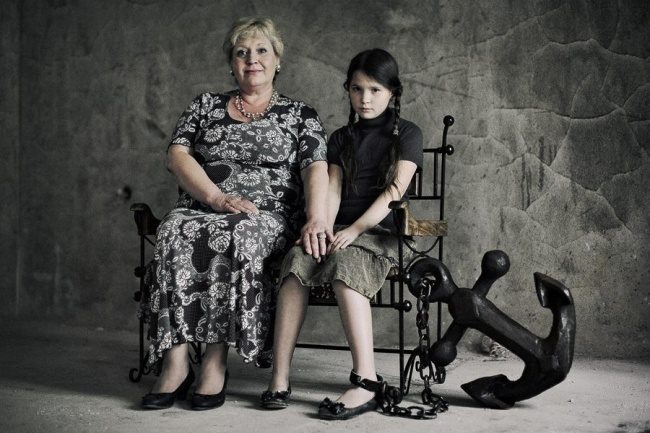
About what parents often do to their children, even without realizing it, Alokanand Diaz perfectly captured, stating:
“Every parent helps their children in this. We call it conditioning. To believe more in how much they need their parents than how much they need to be just what they are.
To be more afraid of disappointing their parents, than living a life in which they don’t love themselves. Fear does that, dependency does that.
We are driven by our helplessness, whether we are aware of it or not. Fear is just a very primitive reaction to helplessness”.
Understand the nature of your child’s Design
“The thing that’s always touched me the most, and has really been the cornerstone of my work, is my work with mothers — they are the guardians of the future.
For most human beings, the most fundamental things they’re going to learn in this life are from their mother. The first true human bond is that bond with the mother.
You can’t change the world, but you can change the way the world is educated.
One of the things that’s been so impressive for me over the years is the impact the knowledge has had, not simply on the lives of the adults that I’m dealing with but the way that is translated into their relationship with their families and their children.
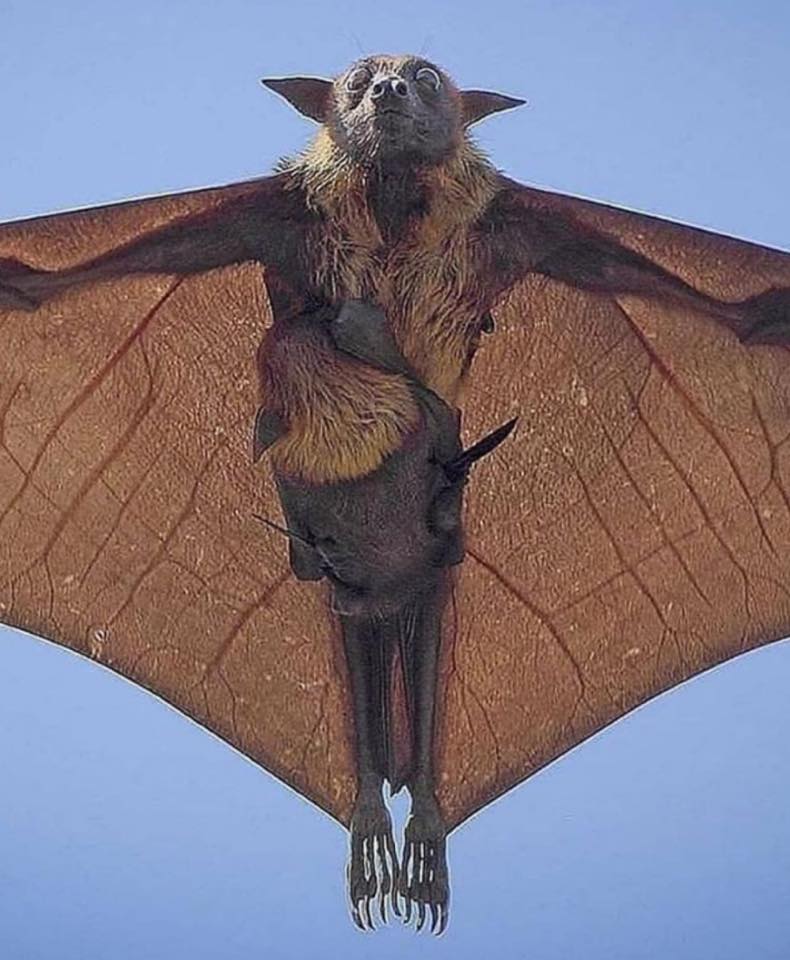
It’s an extraordinary opportunity to understand the nature of your child’s Design, I know this myself. It allows you to be free of all of the uncertainties and concerns that arise out of what it is to be a parent, and having the responsibility for another human being.
Understanding the nature of your child also means you can offer them the privilege of an environment in which they can grow up as themselves. This is quite rare, and it is really what the knowledge is for.
This knowledge is for children.
Unfortunately, you can’t just get it directly to the children. You have to get it to the adults, and it is only through the adults that you can really impact children. But the knowledge is for them, so they can be raised correctly and live the full potential of what it is to be a nine-centered being.
In understanding your children you get to see what in essence is the way for them, how to deal with them, how to enrich their process, how to make them feel better about the nature of who they are; ultimately, it is about respect for who they are.
This is probably the most profound aspect of what it is to be a parent aware of your child’s Design. The opportunity to respect their nature, not to try to condition them to be something they are not, but to accept them for what they are, precisely what they are, without that being a good or a bad thing. Because in fact, it is simply a uniqueness. Embrace that uniqueness in your child.
Human Design provides many things that can be of enormous value in parenting— not just simply understanding your child’s design and how to treat them according to their type, their definition, and their conditioning, but also how to raise them in terms of nourishment. The right nourishment for your child is extraordinarily important for their development as a being, and all these things are possible because of the awareness of the parent.
In the work that I do, perhaps nothing is as significant as working with those that have children, because through them we have the potential for a truly different generation to emerge on this plane.”
Ra Uru Hu